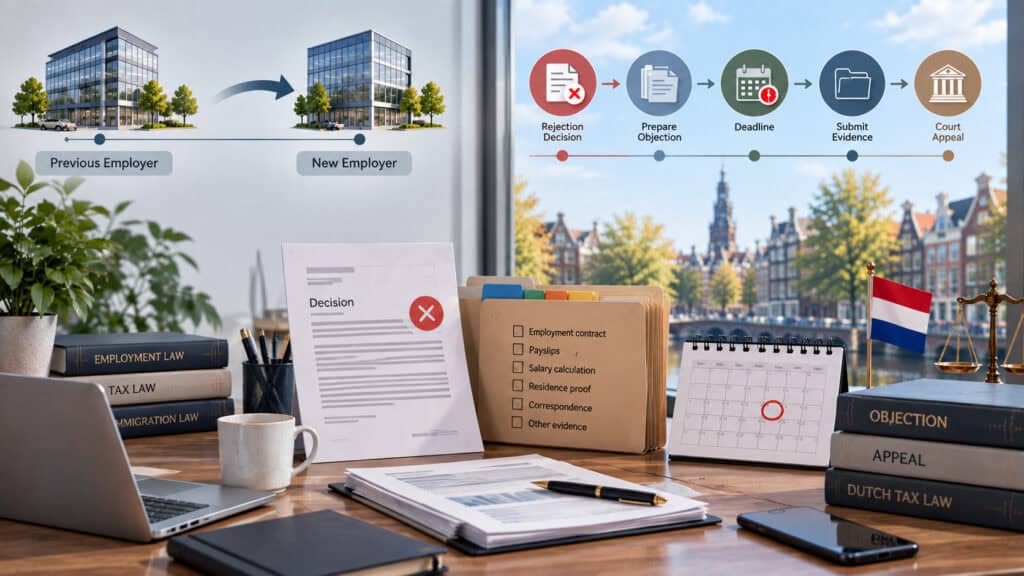


If your 30% ruling application has been rejected, you can challenge the Belastingdienst decision by filing an objection within six weeks of the date on the decision. A strong objection addresses the exact rejection ground, such as salary, recruitment from abroad, the 150-kilometre rule, previous residence, or an employer change, and supports it with documents. If the objection is rejected, you can generally appeal to the Dutch court within six weeks of the decision on objection.
This article is written by Av. Derya Yurteri Çetin, founder of DYC Legal Consultancy. Through DYC Legal Consultancy’s Netherlands practice, she advises international employees on Dutch employment and immigration matters, including issues that overlap with 30% ruling applications and employer changes.
Key rules
- Check the date on the Belastingdienst decision immediately.
- An objection generally must be filed within six weeks.
- If time is short, you can file on time and ask to provide additional grounds later.
- For 2026, the published salary threshold is more than €48,013, or more than €36,497 for qualifying employees under 30 with an academic master’s degree.
- Changing employer does not automatically transfer the ruling.
- A rejected objection can generally be appealed within six weeks.
- Always verify current salary thresholds and official rules before acting.

Why Was Your 30% Ruling Rejected?
The rejection should explain why the Belastingdienst considers the conditions unmet. Common issues include insufficient taxable salary, recruitment from abroad, residence within 150 kilometres of the Dutch border, earlier residence or work in the Netherlands, insufficient evidence, or an employer change. See the Belastingdienst’s official 30% ruling conditions for the current requirements.
The 30% ruling is a tax facility, not an IND residence permit. A rejection does not by itself decide whether you may live or work in the Netherlands, although immigration requirements may need separate review.
Salary Requirement Disputes
For 2026, the Belastingdienst states that taxable annual salary excluding the tax-free allowance must be higher than €48,013. A threshold of more than €36,497 can apply to certain employees under 30 with a qualifying academic master’s degree.
Example: an employee believes their taxable salary is €49,500 but receives a rejection for failing the salary test. An objection should show the calculation and include the contract, payslips, payroll information and documents explaining relevant variable or partial-year pay, not simply state that the salary is sufficient.
These amounts apply to 2026 and should always be checked against the latest official rules.
How Do You Object?
Start with the decision itself. Under the Belastingdienst objection procedure, an objection to a decision generally needs to be submitted within six weeks.
The objection should identify the decision, explain why it is disputed, state the requested outcome and include supporting evidence.
If the deadline is close, do not wait for every document. You can submit the objection within the deadline and request time to provide additional grounds. The Belastingdienst may also provide an opportunity to explain the case through its hearing procedure during an objection.
If the objection is unsuccessful, you can generally appeal the decision on objection to the Dutch court within six weeks.
What If You Changed Employer?
The ruling does not always transfer automatically. Outside certain group-company situations, the employee and new employer generally need to request continuation.
The Belastingdienst states that continuation can be possible when the new employment follows within three months of the previous employment. To seek application from the first working day with the new employer, the request should generally be submitted within four months after starting the new employment.
Example: your employment ends on 31 August and your new job starts on 15 November. The gap may still fall within the three-month period, but your new employer should not simply assume the existing ruling can be applied in payroll.

What If the Six-Week Deadline Has Passed?
Missing the objection deadline can materially limit your options.
Do not assume that submitting a new application automatically reopens an old final decision or restores retroactive entitlement. The appropriate route depends on the original decision, why the deadline was missed, and whether there are genuinely new facts or changed circumstances.
This is particularly important where an earlier rejection may have resulted from incorrect information supplied by an employer, payroll provider or adviser.
Frequently Asked Questions
Can I object if my employer or adviser made the mistake?
Potentially. Gather the original application, decision, employment contract, payslips, employer correspondence and salary calculations so the underlying facts can be assessed.
Can I appeal after my objection is rejected?
Generally yes. Court appeal is normally required within six weeks after the decision on objection.
Does changing employer cancel the 30% ruling?
Not automatically, but continuation conditions and a new joint request may apply. The employment gap and filing dates are important.
Can a successful objection restore the ruling retroactively?
It may, depending on the original application date, the decision being challenged and the procedural history. A later new application is not necessarily equivalent to a timely objection against the original rejection.
Does rejection affect my highly skilled migrant permit?
The tax ruling and highly skilled migrant residence scheme are separate. If salary or employer changes are involved, current IND requirements should be checked independently.
Related Articles and Official Sources
For related DYC Legal guidance, read our article on 30% ruling eligibility when already living in the Netherlands and our guide to the highly skilled migrant permit in the Netherlands.
For primary information, consult the official Belastingdienst 30% ruling requirements and the Belastingdienst guidance on making an objection.
Need Help With a 30% Ruling Objection?
A rejection should be assessed against the actual reason given by the Belastingdienst, the application that was submitted and the evidence available.
DYC Legal Consultancy can review the decision, identify the disputed condition, check the applicable deadline, assess salary and employer-change evidence, and help determine the appropriate next procedural step.
If your 30% ruling has been rejected, or you are unsure whether a salary calculation, employer change or missed deadline has affected your position, arrange a consultation with DYC Legal Consultancy before the applicable objection or appeal period expires.
Legal disclaimer: This article provides general information as of 21 September 2026 and does not constitute individual legal or tax advice. Salary thresholds, procedural rules and IND requirements can change. Always check the latest official rules and the wording of your own decision before acting.